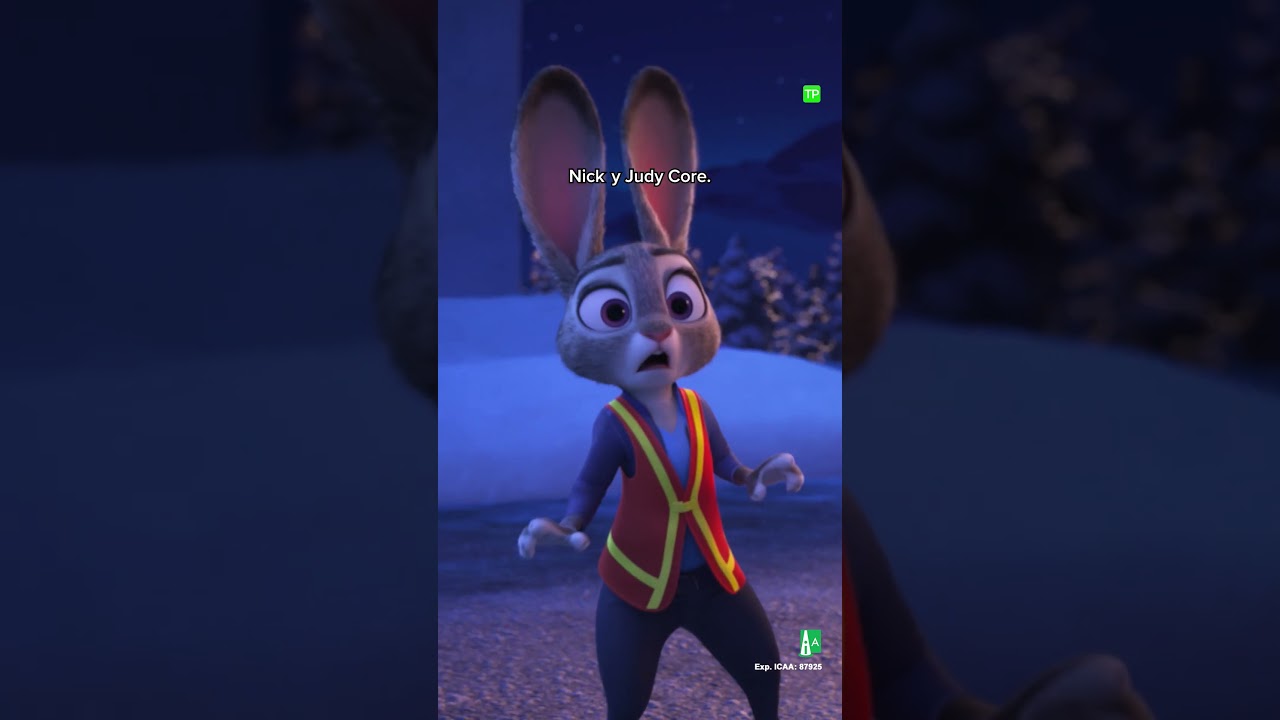
Learn Spanish with Zootrópolis 2 Trailer | Nick & Judy Adventure | Spanish Listening Practice
Improve your Spanish listening skills naturally using authentic movie trailers. This exciting trailer for Zootrópolis 2 includes interactive subtitles, vocabulary, grammar notes and exercises.
What You'll Learn
- Everyday expressions in Spanish
- How native speakers express surprise, action, and humor
- Useful vocabulary for intermediate learners (A2-B1)
- Listening comprehension practice with real-time subtitles
📖 How to Study With This Lesson
- Watch with subtitles: Watch the scene with Spanish and English subtitles to understand the context.
- Watch without subtitles: Cover the subtitles or minimize the video to test your listening comprehension.
- Repeat the sentences: Pause the video and repeat each sentence out loud to improve pronunciation.
- Download the PDF: Get the full transcript and translation for offline study and review.
📝 Scene Summary
🇪🇸 Spanish
En este emocionante tráiler de Zootrópolis 2, Judy y Nick están en una misión. Comienza con: "Coxy White persiguiendo al sospechoso se dirige al este." Judy pregunta: "¿Tú estás seguro de esto?" y Nick responde: "Sígueme como si nada, vamos allá." Judy declara: "Somos el Dream Team." Luego, Judy se disculpa: "Perdón, realmente soy una conejita boba, fue sin querer." Nick responde: "Lo has dicho tú, no yo." Luego hay un comentario sobre una víbora. Judy menciona el "Chanchullo" y finalmente Nick dice: "En fin... ¡ah!" El tráiler muestra la química entre los dos personajes y el humor característico de la película.
🇬🇧 English
In this exciting trailer for Zootrópolis 2, Judy and Nick are on a mission. It begins with: "Coxy White pursuing the suspect, heading east." Judy asks: "Are you sure about this?" and Nick replies: "Follow me like it's nothing, let's go." Judy declares: "We are the Dream Team." Then Judy apologizes: "Sorry, I'm really just a dumb bunny, it was an accident." Nick responds: "You said it, not me." Then there's a comment about a snake. Judy mentions the "Hustle" and finally Nick says: "Anyway... ah!" The trailer shows the chemistry between the two characters and the film's characteristic humor.
Spanish Vocabulary
| Spanish | English | Explanation |
|---|---|---|
| perseguir | to pursue | To chase or follow someone |
| el sospechoso | the suspect | A person suspected of a crime |
| dirigirse | to head (towards) | To go in a certain direction |
| seguro | sure / certain | Having no doubt |
| seguir | to follow | To come after someone |
| nada | nothing | Not anything |
| vamos allá | let's go | Expression to start moving |
| el Dream Team | the dream team | A group of exceptional people (borrowed from English) |
| la conejita | little bunny | Affectionate diminutive of "conejo" (rabbit) |
| boba | dumb / silly | Lacking intelligence (informal) |
| sin querer | accidentally | Without intending to |
| la víbora | the viper / snake | A venomous snake |
| el chanchullo | the hustle / scam | A clever trick or scheme (colloquial) |
| en fin | anyway / well | Used to change topic or conclude |
Grammar Notes
📌 Reflexive Verbs - "dirigirse"
"He/She heads east."
Rule: "dirigirse" is a reflexive verb. It is conjugated with the reflexive pronoun: "me dirijo, te diriges, se dirige..." It means "to go towards" or "to head".
📌 The Subjunctive - "¿Tú estás seguro de esto?"
"Are you sure about this?"
Rule: "estar seguro" is used with the indicative when stating certainty. In questions, the indicative is also used because the question is about a fact.
📌 The Imperative - "Sígueme"
"Follow me like it's nothing."
Rule: "Sígueme" is the imperative of "seguir" for "tú" + the pronoun "me" (follow me). Imperative verbs are used to give orders or instructions.
📌 Colloquial Expressions - "Chanchullo"
"It's called a Hustle, sweetheart."
Rule: "Chanchullo" is a colloquial word meaning "trick" or "scam". It is used to describe a clever plan or scheme.
📌 Direct Object Pronouns - "Lo has dicho tú"
"You said it, not me."
Rule: "Lo" is a direct object pronoun that replaces "eso" (what was said). "has dicho" is the present perfect of "decir".
Frequently Asked Questions
❓ Can movies help you learn Spanish?
Yes, absolutely! Movies improve listening skills and vocabulary naturally because you hear authentic dialogues, expressions, and pronunciation used by native speakers in real contexts.
❓ What level is this lesson?
This lesson is suitable for A2-B1 learners (intermediate level). It contains common everyday expressions and clear pronunciation that are perfect for learners who already have basic Spanish knowledge.
❓ Should I watch the scene more than once?
Yes, definitely! Repetition improves comprehension and pronunciation. Watch it multiple times - first with subtitles, then without, and practice repeating the sentences out loud.

No comments:
Post a Comment