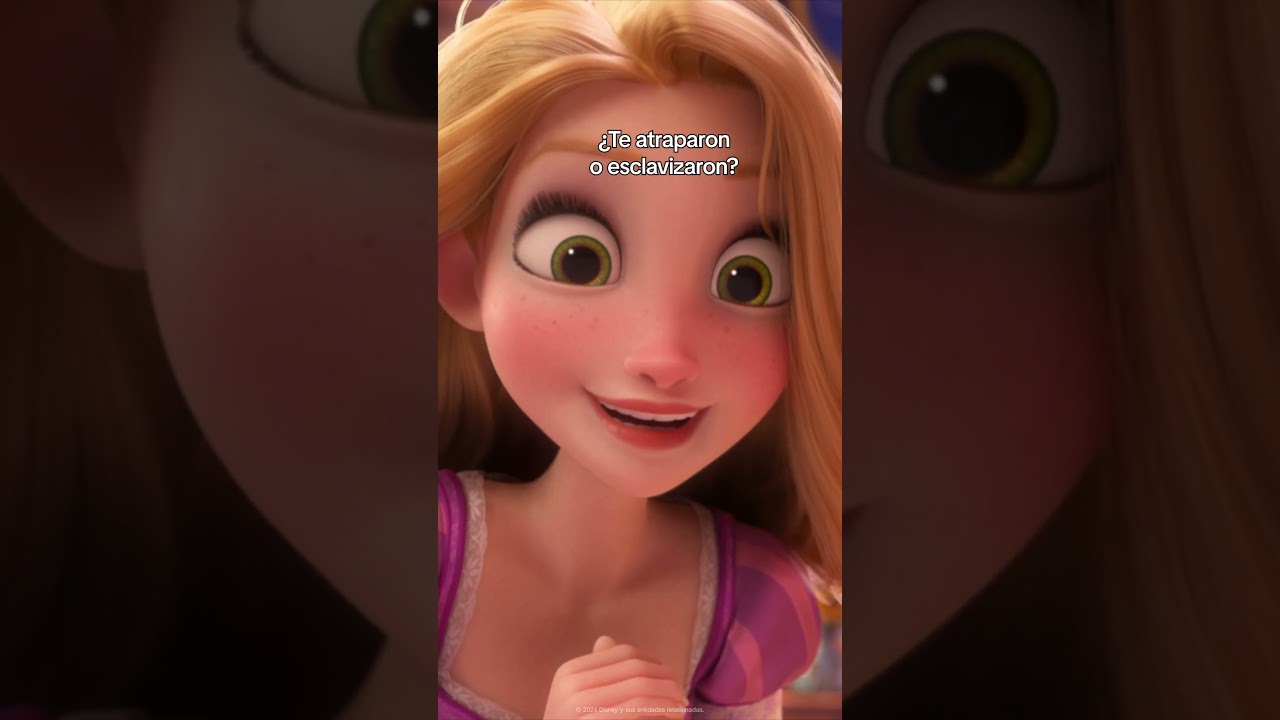
Spanish Listening Practice: Vanellope & Disney Princesses Scene | Learn Spanish with Movies
Improve your Spanish listening skills naturally using authentic movie scenes. This hilarious scene from Wreck-It Ralph where Vanellope meets the Disney princesses includes interactive subtitles, vocabulary, grammar notes and exercises.
What You'll Learn
- Everyday expressions in Spanish used in humorous conversations
- How native speakers ask questions, express disbelief, and make jokes
- Useful vocabulary for intermediate learners (A2-B1)
- Listening comprehension practice with real-time subtitles
📖 How to Study With This Lesson
- Watch with subtitles: Watch the scene with Spanish and English subtitles to understand the context.
- Watch without subtitles: Cover the subtitles or minimize the video to test your listening comprehension.
- Repeat the sentences: Pause the video and repeat each sentence out loud to improve pronunciation.
- Download the PDF: Get the full transcript and translation for offline study and review.
📝 Scene Summary
🇪🇸 Spanish
En esta divertidísima escena de Wreck-It Ralph, Vanellope se encuentra con las princesas de Disney. Ella intenta explicarles: "Chicas, yo les explico... es que... también soy princesa." Las princesas reaccionan con incredulidad: "¿Qué dijiste?" Vanellope se presenta: "¡Sí! La princesa Vanellope von Schweetz, de los Von Schweetz de Sugar Rush." Luego las princesas le hacen una serie de preguntas típicas de princesas: ¿Tienes cabello mágico? ¿Manos mágicas? ¿Los animales te hablan? ¿Te envenenaron? ¿Un hechizo? ¿Te atraparon? Vanellope responde "No" a todas, y cuando le preguntan si hizo un trato con una bruja del mar, ella exclama: "¡Nooo! ¿Quién haría algo tan loco?" Finalmente, la pregunta clave: "¿Los demás piensan que tus problemas se acabaron porque un hombre fuerte te salvó?" Vanellope responde: "¡Sí! Pero, ¿qué les pasa?" Y las princesas exclaman: "¡SÍ ES UNA PRINCESA!" La escena es un homenaje humorístico a los clichés de las princesas Disney.
🇬🇧 English
In this hilarious scene from Wreck-It Ralph, Vanellope meets the Disney princesses. She tries to explain: "Girls, let me explain... it's just that... I'm also a princess." The princesses react with disbelief: "What did you say?" Vanellope introduces herself: "Yes! Princess Vanellope von Schweetz, of the Sugar Rush Von Schweetzes." Then the princesses ask her a series of typical princess questions: Do you have magic hair? Magic hands? Do animals talk to you? Were you poisoned? A spell? Were you kidnapped? Vanellope answers "No" to all of them, and when asked if she made a deal with a sea witch, she exclaims: "Nooo! Who would do something that crazy?" Finally, the key question: "Do people assume all your problems got solved because a big strong man showed up?" Vanellope replies: "Yes! But what is wrong with them?" And the princesses exclaim: "SHE IS A PRINCESS!" The scene is a humorous tribute to Disney princess clichés.
Spanish Vocabulary
| Spanish | English | Explanation |
|---|---|---|
| la princesa | princess | A female member of a royal family |
| explicar | to explain | To make something clear or understandable |
| el cabello | hair | Strands growing from the scalp (formal) |
| mágico | magic | Having supernatural powers |
| las manos | hands | Parts of the body at the end of arms |
| los animales | animals | Living creatures (not human) |
| charlar | to chat | To talk in a friendly way |
| envenenar | to poison | To administer poison to someone |
| el hechizo | spell | Magical words that have an effect |
| atrapar | to kidnap / to catch | To capture or take someone against their will |
| esclavizar | to enslave | To make someone a slave |
| la policía | police | Law enforcement officers |
| el trato | deal | An agreement between two parties |
| la bruja | witch | A woman with magical powers |
| la voz | voice | The sound produced in the throat |
| las piernas | legs | Limbs used for walking |
| el beso | kiss | A touch with the lips |
| guácala | gross / yuck | Expression of disgust (Latin American) |
| el problema | problem | A difficult situation |
Grammar Notes
📌 Question Formation - "¿Qué dijiste?"
"What did you say?"
Rule: In Spanish, questions are formed with inverted question marks (¿) at the beginning and (?) at the end. "Qué" is used for "what", and "dijiste" is the preterite form of "decir" for "tú".
📌 The Preterite Tense - "dijiste"
"What did you say?"
Rule: The preterite tense is used for completed past actions. "Dijiste" is the preterite of "decir" for "tú". It is an irregular verb: dije, dijiste, dijo, dijimos, dijisteis, dijeron.
📌 Negative Responses - "No" with Exclamations
"No! Nooo!"
Rule: "No" is used to negate. Repeating or lengthening it (Nooo) adds emphasis and emotion, very common in spoken Spanish.
📌 Colloquial Expressions - "Guácala"
"Gross!"
Rule: "Guácala" is a Latin American colloquial expression used to show disgust. It is similar to "¡Qué asco!" (How disgusting!) and is very informal.
📌 Question Words - "¿Qué clase de...?"
"What kind of princess are you?"
Rule: "Qué clase de" means "What kind of". It is used to ask about the type or category of something. The verb "eres" is the present tense of "ser" for "tú" (you are).
Frequently Asked Questions
❓ Can movies help you learn Spanish?
Yes, absolutely! Movies improve listening skills and vocabulary naturally because you hear authentic dialogues, expressions, and pronunciation used by native speakers in real contexts.
❓ What level is this lesson?
This lesson is suitable for A2-B1 learners (intermediate level). It contains common everyday expressions and clear pronunciation that are perfect for learners who already have basic Spanish knowledge.
❓ Should I watch the scene more than once?
Yes, definitely! Repetition improves comprehension and pronunciation. Watch it multiple times - first with subtitles, then without, and practice repeating the sentences out loud.

No comments:
Post a Comment