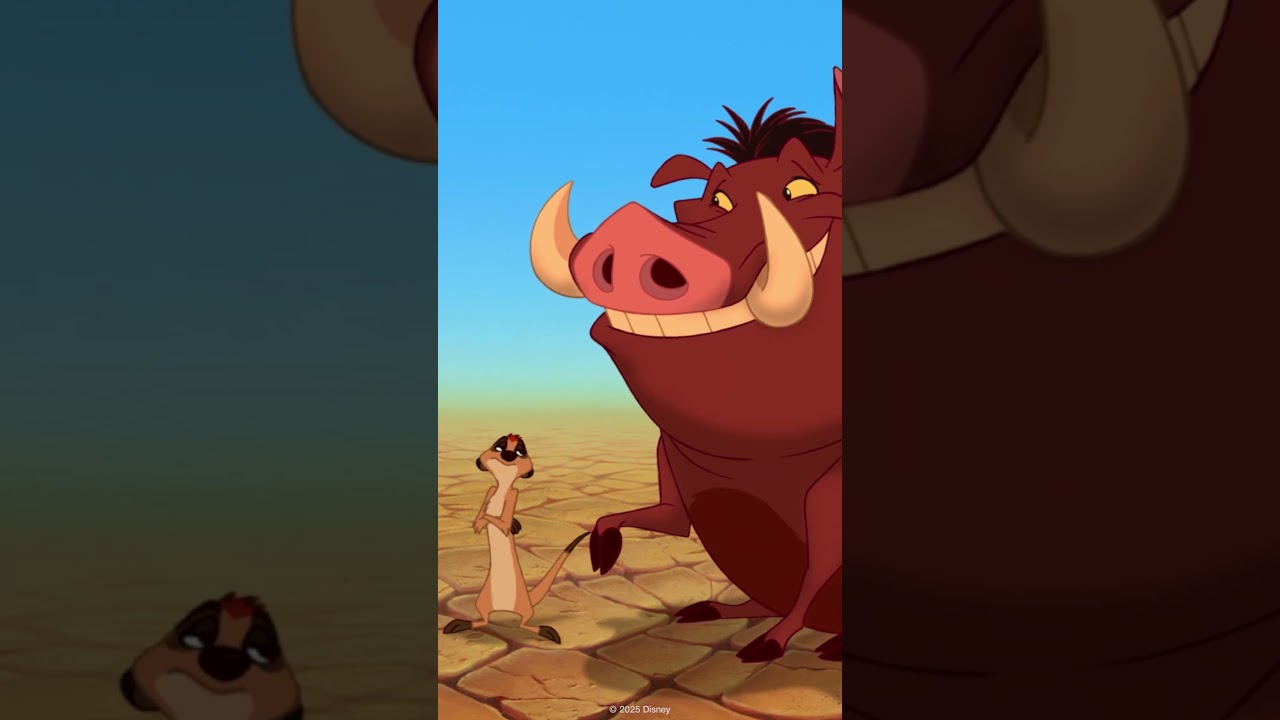
Spanish Listening Practice: Hakuna Matata Scene | El Rey León | Disney Español
Improve your Spanish listening skills naturally using authentic movie scenes from Disney's The Lion King. This iconic "Hakuna Matata" scene includes interactive subtitles, vocabulary, grammar notes and exercises.
What You'll Learn
- Everyday expressions in Spanish used in philosophical conversations
- How native speakers give advice, express feelings, and use humor
- Useful vocabulary for intermediate learners (A2-B1)
- Listening comprehension practice with real-time subtitles
📖 How to Study With This Lesson
- Watch with subtitles: Watch the scene with Spanish and English subtitles to understand the context.
- Watch without subtitles: Cover the subtitles or minimize the video to test your listening comprehension.
- Repeat the sentences: Pause the video and repeat each sentence out loud to improve pronunciation.
- Download the PDF: Get the full transcript and translation for offline study and review.
📝 Scene Summary
🇪🇸 Spanish
En esta icónica escena de El Rey León, Simba se encuentra con Timón y Pumbaa. Simba dice: "¿De dónde vienes? ¿Qué importa? No regresaré." Timón le dice: "Eres fugitivo. ¡Qué bien! También nosotros." Simba confiesa: "¿Qué hiciste, chico? Algo terrible. No quiero hablar de eso." Timón responde: "Bien, no queremos saberlo." Pumbaa pregunta: "Por favor, Timón. ¿Podemos ayudarte? Solo si pueden cambiar el pasado." Timón responde: "Solo si pueden cambiar el pasado." Luego Pumbaa intenta dar un consejo: "¿Sabes? En momentos como este, mi amigo Timón siempre dice que hay que dejar tu atrasado en el pasado." Timón lo corrige: "¡No, no, no! Pronto descansa, ya se te sobrecalentó el cerebro." Pumbaa corrige: "Es: siempre hay que dejar el pasado atrás. Mira chico, pasan cosas malas y no puedes ponerles remedio, ¿cierto? Cierto." Timón agrega: "¡Falso! Siempre que el mundo te dé la espalda, lo que tú debes hacer es darle la espalda al mundo." Simba dice: "No fue lo que me enseñaron." Timón responde: "Tal vez necesites nuevas lecciones. Repite conmigo: Hakuna Matata. ¿Qué?" Y finalmente Pumbaa explica: "¡Hakuna Matata! No te angusties." La escena captura perfectamente la filosofía de "sin preocupaciones" que define la película.
🇬🇧 English
In this iconic scene from The Lion King, Simba meets Timon and Pumbaa. Simba says: "Where do you come from? What does it matter? I'm not going back." Timon tells him: "You're a fugitive. That's great! So are we." Simba confesses: "What did you do, kid? Something terrible. I don't want to talk about it." Timon replies: "Good, we don't want to know." Pumbaa asks: "Please, Timon. Can we help you?" Timon replies: "Only if you can change the past." Then Pumbaa tries to give advice: "You know? In times like these, my friend Timon always says you have to put your 'behind' in the past." Timon corrects him: "No, no, no! Take a rest, your brain is overheating." Pumbaa corrects: "It's: you always have to leave the past behind. Look kid, bad things happen and you can't do anything about it, right? Right." Timon adds: "Wrong! Whenever the world turns its back on you, what you should do is turn your back on the world." Simba says: "That's not what I was taught." Timon replies: "Maybe you need new lessons. Repeat after me: Hakuna Matata. What?" And finally Pumbaa explains: "Hakuna Matata! It means no worries." The scene perfectly captures the "no worries" philosophy that defines the film.
Spanish Vocabulary
| Spanish | English | Explanation |
|---|---|---|
| ¿De dónde...? | Where from...? | Question to ask about origin |
| importar | to matter | To be important or relevant |
| regresar | to go back | To return to a place |
| el fugitivo | the fugitive | A person who is running away |
| terrible | terrible | Very bad or awful |
| el pasado | the past | Time that has already happened |
| atrás | behind / backwards | In a backward direction |
| el atrasado | behind / rear | Playful/silly word for "behind" (Pumbaa's mistake) |
| sobrecalentar | to overheat | To become too hot |
| el remedio | the remedy / solution | Something that solves a problem |
| falso | false / wrong | Not true or incorrect |
| la espalda | the back | The rear part of the body |
| dar la espalda | to turn one's back | To ignore or reject someone |
| la lección | the lesson | A teaching or learning session |
| angustiarse | to worry / to distress | To feel anxious or troubled |
| Hakuna Matata | Hakuna Matata | Swahili phrase meaning "no worries" |
Grammar Notes
📌 Question Words - "¿De dónde...?"
"Where do you come from?"
Rule: "¿De dónde?" is used to ask about origin. "Vienes" is the present tense of "venir" (to come) for "tú". The preposition "de" (from) is placed before "dónde".
📌 The Imperative - "Repite conmigo"
"Repeat after me: Hakuna Matata."
Rule: "Repite" is the imperative form of "repetir" (to repeat) for "tú". "Conmigo" means "with me" (a combination of "con" + "migo").
📌 Subjunctive - "Tal vez necesites"
"Maybe you need new lessons."
Rule: "Tal vez" (maybe) often triggers the subjunctive mood. "Necesites" is the present subjunctive of "necesitar" for "tú". It expresses uncertainty or possibility.
📌 Reflexive Verbs - "angustiarse"
"Don't worry." (literally: Don't distress yourself.)
Rule: "Angustiarse" is a reflexive verb meaning "to worry". "No te angusties" is the negative imperative of "angustiarse" for "tú", meaning "Don't worry" or "Don't get distressed."
📌 "Hay que" - Obligation Expression
"You have to leave the past behind."
Rule: "Hay que" + infinitive is an impersonal expression meaning "one must" or "you have to". It doesn't change with the subject and is used for general advice.
Frequently Asked Questions
❓ Can movies help you learn Spanish?
Yes, absolutely! Movies improve listening skills and vocabulary naturally because you hear authentic dialogues, expressions, and pronunciation used by native speakers in real contexts.
❓ What level is this lesson?
This lesson is suitable for A2-B1 learners (intermediate level). It contains common everyday expressions and clear pronunciation that are perfect for learners who already have basic Spanish knowledge.
❓ Should I watch the scene more than once?
Yes, definitely! Repetition improves comprehension and pronunciation. Watch it multiple times - first with subtitles, then without, and practice repeating the sentences out loud.

No comments:
Post a Comment